Heatmap Behavioral Intelligence for AI Workflows
Most ecommerce teams already have too much data. The real problem is that none of it talks to each other. Your analytics sit in one dashboard, your AI tools live somewhere else, and your team still spends hours trying to figure out why conversions dropped last week.
That’s starting to change.
Heatmap behavioral intelligence can now power AI workflows, copilots, automation systems, and external tools through API and MCP access. That means shopper behavior no longer has to stay trapped inside dashboards. Your AI systems can now understand how people browse, hesitate, drop off, and buy.
This article breaks down what that means, why it matters for ecommerce teams, and what brands and agencies can start building with behavioral intelligence data today.
Dashboards Alone Don’t Solve Ecommerce Problems
Most analytics tools are good at reporting what happened. They’re much worse at explaining why it happened.
A dashboard might tell you conversion rate dropped 12% last week. But it usually won’t tell you:
- whether the issue came from new visitors or returning shoppers
- whether a specific landing page caused the drop
- whether mobile users struggled with navigation
- whether buyers behaved differently from non-buyers
That gap creates a massive amount of manual analysis work.
Most AI Systems Still Lack Behavioral Context
AI tools are becoming common across ecommerce teams. Brands use them for:
- ad creative generation
- merchandising recommendations
- reporting summaries
- CRO ideation
- customer support workflows
But most of those systems are missing behavioral intelligence.
Without behavioral data, AI can generate suggestions, but it cannot reason about real shopper behavior. It can’t see:
- where shoppers rage click
- which paths lead to purchases
- what interactions correlate with higher AOV
- where high-intent sessions break down
That’s why many AI recommendations still feel generic.
In our analysis of ecommerce CRO workflows, the biggest bottleneck usually isn’t data collection. It’s interpretation. Teams spend hours stitching together analytics, recordings, funnels, and attribution tools trying to understand one simple question:
“Why are shoppers behaving differently?”
Ecommerce Teams Are Drowning in Reports
The average company now uses more than 100 SaaS applications across departments according to Okta’s 2024 Business at Work report.
That fragmentation creates real problems:
- marketing teams look at traffic metrics
- CRO teams review session recordings
- media buyers watch ROAS
- product teams review funnels
- executives want revenue answers
Meanwhile, nobody sees the full behavioral story.
This is where Heatmap starts becoming more than dashboard software.
Instead of behaving like a reporting destination, behavioral intelligence becomes something external systems can reason on top of.
Heatmap Behavioral Intelligence Changes the Workflow
The shift here is bigger than “we launched an API.”
The real shift is this:
Your shopper behavior data can now flow into AI systems, automation tools, and external workflows.
That changes what ecommerce teams can build.
Behavioral Intelligence Becomes Actionable Outside the Dashboard
Traditionally, behavioral analytics stayed inside reporting tools. Someone had to manually:
- review the data
- identify patterns
- explain the issue
- recommend next steps
Now that process can happen across connected systems.
For example:
- an AI copilot can identify conversion drop-off patterns
- a workflow can alert teams when buyer behavior changes
- an automation system can compare journey paths week-over-week
- an external reporting tool can summarize revenue-impacting friction automatically
This matters because behavioral data becomes far more valuable once other systems can reason on top of it.
And shopper behavior contains some of the highest-signal data in ecommerce.
Heatmap Connects Behavioral Data Across Systems
Heatmap already tracks:
- click behavior
- scroll depth
- funnel drop-off
- shopper journeys
- rage clicks
- session recordings
- revenue per session
- A/B test behavior
- custom events
Now those insights can power workflows outside the Heatmap dashboard itself.
For example, a CRO team could:
- identify the highest-drop funnel step in Heatmap
- send that data into an AI analysis workflow
- compare mobile vs desktop behavior automatically
- generate recommended test ideas
- push summaries directly into Slack or Notion
The important part is not the protocol.
The important part is that behavioral intelligence becomes portable.
According to Salesforce research, 84% of CIOs say AI will be as significant as the internet itself.
But AI systems are only as useful as the context they receive.
Behavioral context is what makes recommendations useful instead of generic.
What Ecommerce Teams Can Build With Heatmap AI Workflows
This is where things get interesting.
Once AI systems can access behavioral intelligence, ecommerce teams can start building systems that move beyond reporting and into decision-making support.
AI CRO Assistants and Automated Analysis
One of the clearest use cases is AI-assisted CRO analysis.
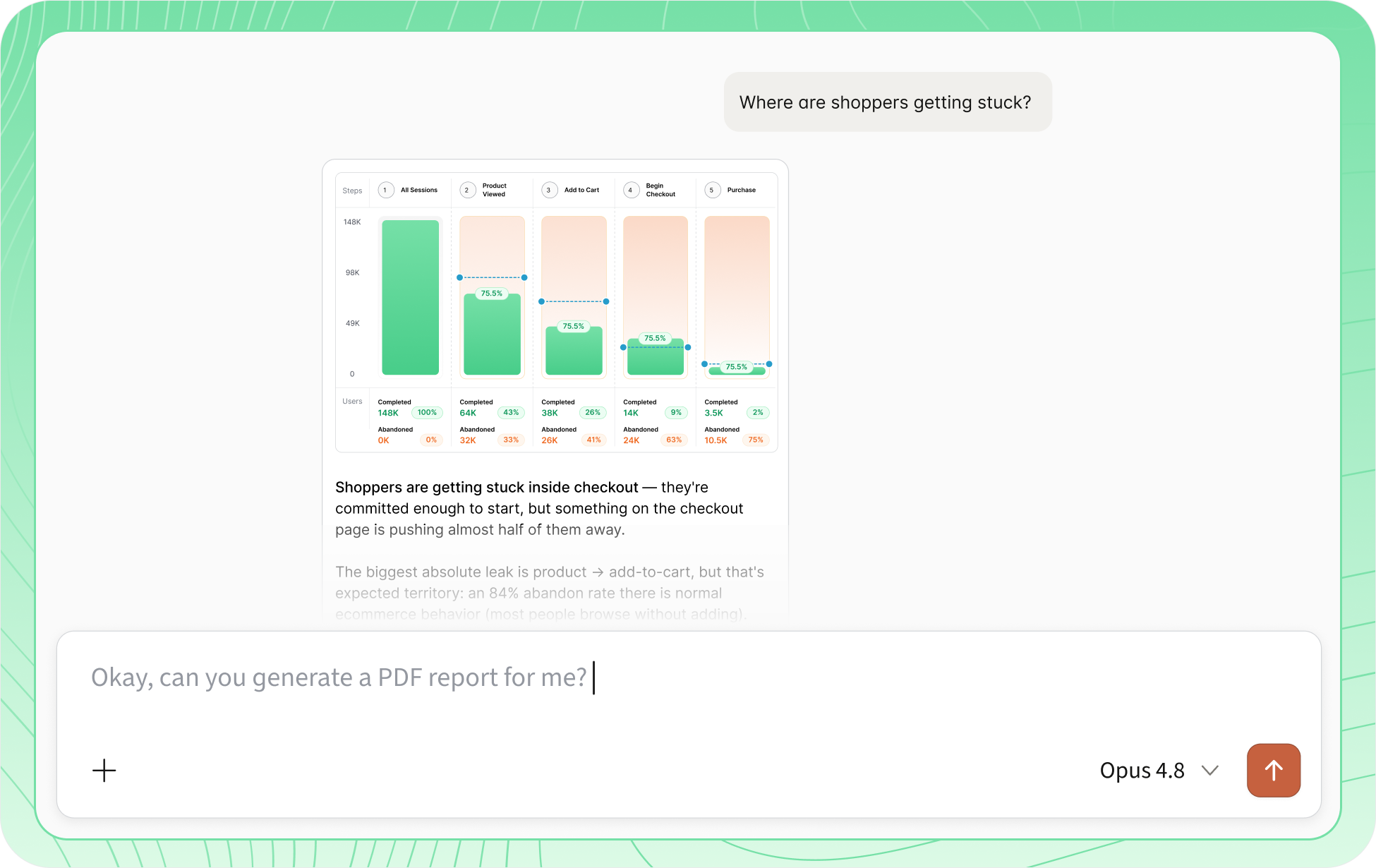
Instead of manually reviewing five dashboards, a team could ask:
- “Which journeys lost the most revenue last week?”
- “What changed on mobile PDPs?”
- “Which CTA underperformed after the redesign?”
- “Where are high-intent shoppers dropping off?”
Then the system can pull behavioral data directly from Heatmap.
For example:
- Journey Analysis data can identify the highest drop-off path
- Funnel analytics can quantify the loss
- Session recordings can reveal the friction
- Revenue heatmaps can show which elements underperformed
That dramatically shortens the time between:
problem → diagnosis → action
The biggest win of connected behavioral workflows is speed. Teams spend less time stitching together reports and more time identifying what changed, where friction appeared, and what to test next.
Automated Opportunity Detection
Most teams don’t know where to look first.
That’s why proactive detection matters.
Heatmap behavioral intelligence can surface:
- pages with unusually high rage clicks
- funnels with abnormal drop-off
- low-visibility elements with high revenue impact
- high-intent sessions failing to convert
- traffic-source-specific friction
For example:
- a mobile PDP CTA might receive 41% fewer clicks after a redesign
- a shipping accordion interaction might correlate with 18% higher conversion rates
- shoppers entering through TikTok ads might bounce 27% more frequently than Meta traffic
Those patterns are difficult to spot manually at scale.
Heatmap already helps brands visualize these behaviors using filters, session recordings, and revenue-based heatmaps. External AI workflows can now build on top of that intelligence automatically.
AI Workflows Become More Context-Aware
Most AI tools today operate without shopper context.
That creates weak recommendations.
For example:
- an AI copy tool might recommend changing a CTA
- but it doesn’t know whether shoppers even see the CTA
- or whether buyers behave differently than non-buyers
- or whether mobile users struggle before reaching checkout
Behavioral intelligence closes that gap.
According to McKinsey, companies using AI for personalization can increase revenue by 5-15% depending on implementation quality.
But personalization without behavioral context often misses the real friction points.
Behavior tells you:
- what shoppers care about
- what they ignore
- where they hesitate
- what predicts purchase intent
That context makes AI systems dramatically more useful.
The Future of Ecommerce Intelligence Is Behavioral
Most analytics tools stop at reporting.
The next evolution is systems that can interpret shopper behavior and help teams make decisions faster.
That’s where behavioral intelligence becomes important.
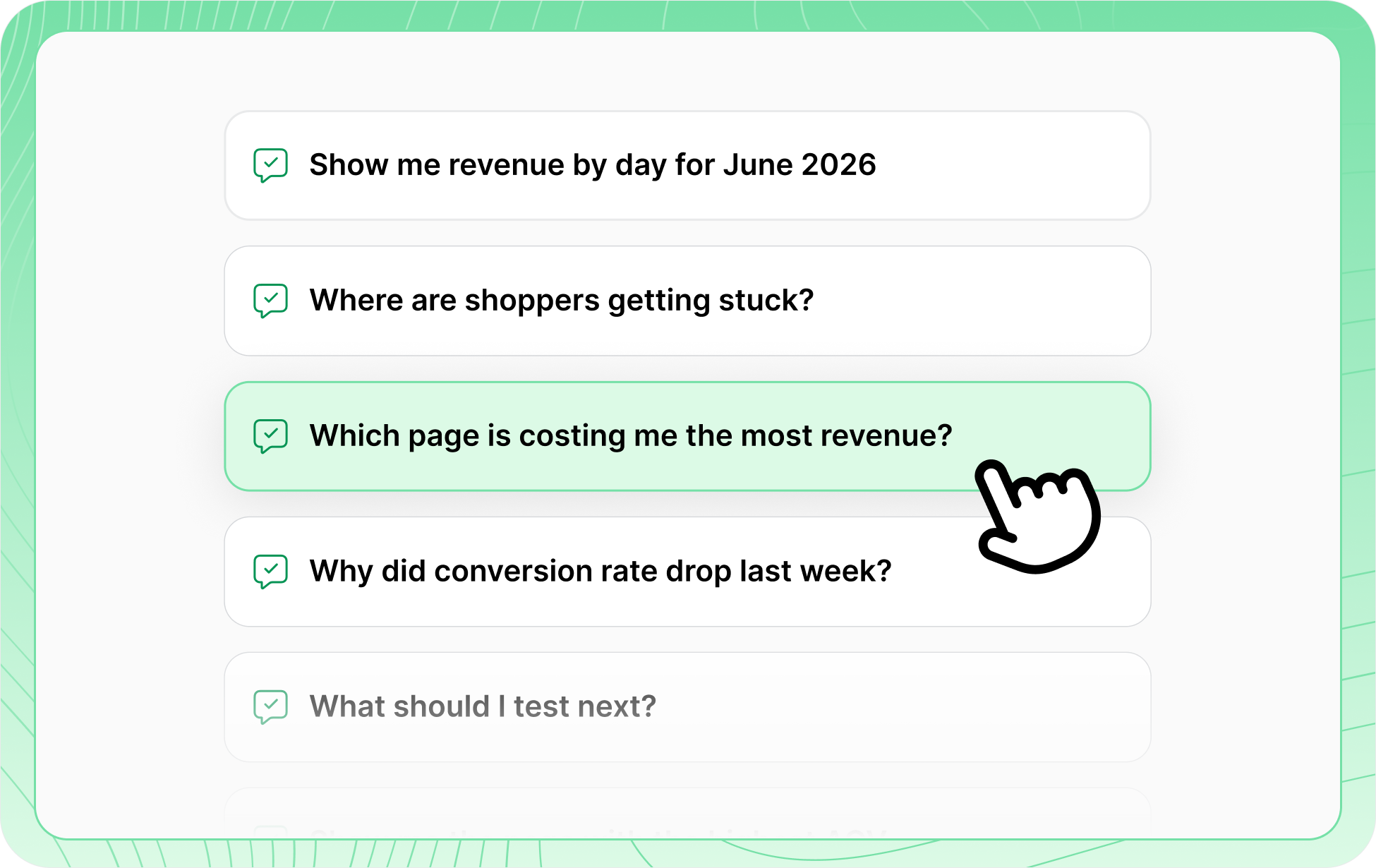
The Shift From Reporting to Reasoning
Dashboards answer:
“What happened?”
Behavioral intelligence systems start answering:
- “Why did it happen?”
- “What changed?”
- “What should we test next?”
- “Which sessions matter most?”
- “Where is the revenue opportunity?”
That changes how ecommerce teams work.
Instead of spending hours manually interpreting charts, teams can focus on execution:
- testing
- merchandising
- copy improvements
- UX fixes
- funnel iteration
Heatmap already provides much of the behavioral layer needed for that analysis:
- Journey Analysis
- funnel diagnostics
- session recordings
- revenue heatmaps
- shopper segmentation
- custom events
Now that intelligence can extend into external workflows and AI systems.
Behavioral Data Will Become More Central to AI Commerce
As more ecommerce teams adopt AI workflows, behavioral data becomes more valuable.
Because behavior reveals intent.
Not traffic.
Not vanity metrics.
Not generic conversion averages.
Real behavior.
The brands that win over the next few years probably won’t be the ones with the most dashboards. They’ll be the ones whose systems understand shopper behavior fastest and turn that insight into action quickly.
And that’s the larger shift happening here.
Heatmap is no longer just a place to view shopper data. It’s becoming a behavioral intelligence layer that other systems can reason on top of.
Final Thought
Ecommerce teams don’t need more dashboards. They need systems that help explain shopper behavior faster and turn that understanding into action.
Behavioral intelligence changes the role Heatmap plays inside a modern ecommerce stack. Instead of keeping data trapped inside reports, brands can now bring shopper behavior into AI workflows, agents, automation systems, and external analysis tools.
That means the next time conversion rate drops, you’re not just staring at charts. You can trace the journey, analyze the friction, compare buyer behavior, and let connected systems help surface what matters most.

Carina MunroPublished August 3, 2026