Key Takeaways:
- Transform Data Into Revenue-Driving Insights: Understanding and leveraging User Behavior Analytics (UBA) is crucial for transforming mere traffic insights into actionable data that significantly drives e-commerce revenue.
- Go Beyond Vanity Metrics: UBA offers a detailed breakdown of user interactions, effectively identifying friction points and transaction triggers, unlike traditional analytics, which often focuses on vanity metrics.
- Make Revenue-Focused, Customer-Centric Decisions: Implementing UBA allows ecommerce brands to make informed, revenue-centric decisions through precise customer segmentation and personalized marketing, ultimately optimizing the customer journey for maximum financial gain.
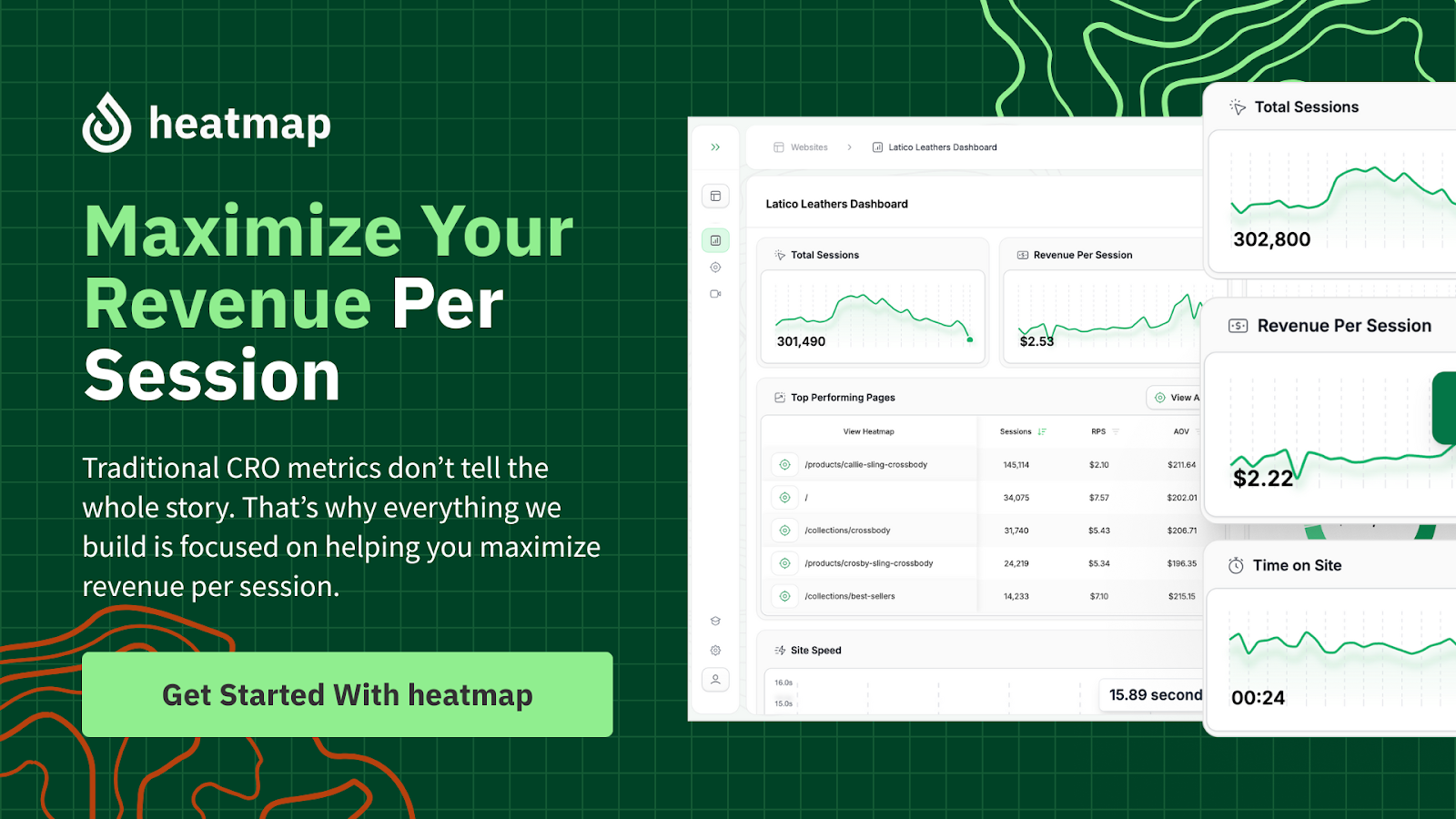
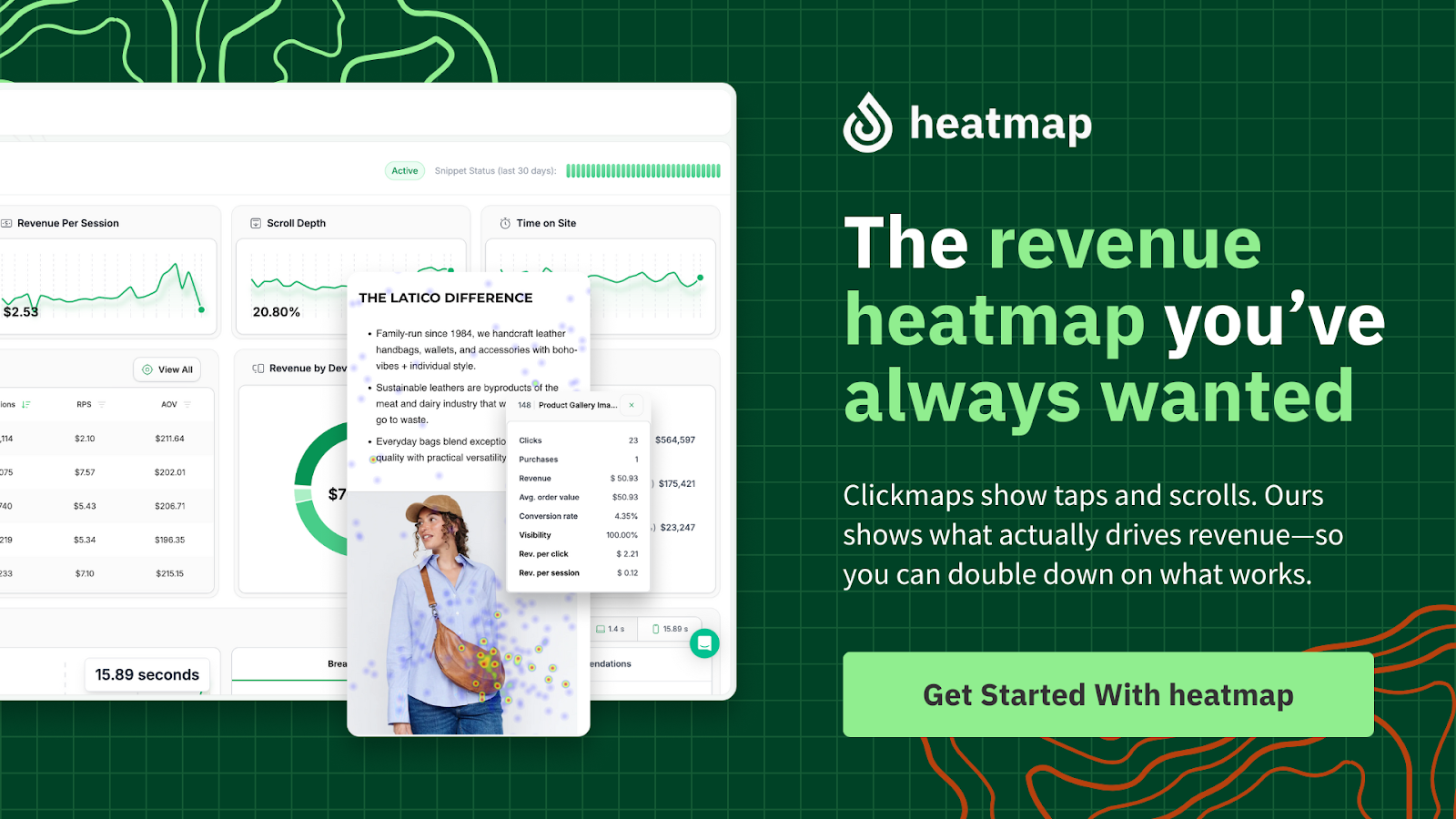
At Heatmap, we go beyond traditional analytics. Our platform shows how users behave on your site and ties those actions to real revenue. You’ll see exactly which clicks drive conversions and which elements need attention. With fast implementation, AI-backed insights, and a focus on revenue, we give ecommerce teams the clarity they need to make smarter decisions; faster, cleaner, and backed by what matters most: the numbers.
User behavior analytics helps you understand what people do on your site, not just where they land, but how they move, pause, and act. It’s about spotting patterns that lead to conversions, frustration, or drop-off. Whether you’re fine-tuning a product page or rethinking an entire layout, these insights provide the direction. Businesses that measure behavior aren’t guessing; they’re adapting to customers' needs, click by click.
This blog will explore how user behavior analytics works, the key insights it reveals about customer actions, and how e-commerce brands can use this data to improve site performance, increase conversions, and make more informed business decisions.

How User Behavior Analytics Differs From Traditional Analytics
Traditional analytics tools are like that nosy neighbor who peeks through the curtains but never actually knows what’s going on inside. Pageviews, session durations, and bounce rates are the basic stats, but they don’t tell you why someone stuck around or rage-quit your checkout. Sure, ten thousand people landed on your site. How many bought anything? Why did Jerry from Omaha click on the new arrivals and disappear forever?
Traditional Tools Miss The Story
What is User Behavior Analytics (UBA)? Well, it's like a private investigator who puts on a fake mustache and follows your users down every digital alleyway. UBA dissects every click, scroll, and hesitation, mapping out friction points and revenue triggers like it’s solving a caper. Instead of giving you nice graphs about traffic spikes you can’t monetize, UBA zooms in on what drives transactions: real human behavior linked to cold, hard sales.
From Clicks To Context
User Behavior Analysis picks apart which on-site maneuvers end with an abandoned cart and which churn out repeat customers. It’s about reconstructing entire customer journeys, pinpointing the exact moments money changes hands (or slips through your fingers). While traditional analytics is busy patting itself on the back for a low bounce rate, User Behavior Analytics is scoffing and telling you exactly why your add-to-cart button might as well be invisible for mobile users after dark.
Revenue Over Vanity
User Behavior Analytics doesn’t care about vanity metrics. The question isn’t how many people visited; it’s how each action impacts your bottom line. If your analytics aren’t spelling out where the money’s made, or lost, it’s just busywork. User Behavior Analytics is ruthless. It’s for brands that care about revenue, not just traffic.
Key Components Of User Behavior Analytics
Let’s rip the hood off Website Data 101 and see what actually drives revenue instead of just traffic or, worse, useless pageviews. User behaviour analytics is about piecing together the psychodrama of why users spend, rage-quit, or ghost your overpriced socks.
Here’s what matters:
Clicks, Scrolls, And Rages (Session Interactions)
Knowing where users click or how far they scroll is basic, but without context, it’s like counting how many people walked into your store and promptly stared at the ceiling. Advanced analytics goes beyond the vanity: Which parts of your page drive checkouts? Where does the rage-click chaos cluster up? Are people scrolling just to find your buried call-to-action, or do they bounce the second your pop-up hijacks their screen?
Purchase Behavior And Funnel Progression
Serious analytics tracks the hard stuff, how users glide, stumble, or completely bail through your funnel. Who abandons ship at checkout? What paths make the cash register sing? If you’re not tracking journey-to-dollar, you’re optimizing blindfolded.
Segmentation And Filtering
It’s not 2010. Blasting the same analysis across all visitors is for rookies. By high rollers, one-off buyers, ad source, device, and even goldfish attention spans, granular filtering turns “meh” insights into bankable gold. Slice and dice to see which crowd is worth your retargeting budget.
Revenue Attribution
Clicks are cheap. Revenue is king. True user behaviour analysis ties every tap, rage-click, and scroll directly to real dollars. Which button’s ROI lets you buy an espresso machine, and which just keeps the lights on? Follow the money, not the shiny graphs.
User Feedback Loops
Mix in surveys, pop-ups (used intelligently, please), or direct interaction prompts. Get the why behind the what. Heatmaps light up pain points; feedback shows you the dagger. Know what’s working, but more importantly, know what’s pissing people off.
Read also: How does Behavioral Analytics for Ecommerce Drive Revenue?
Benefits Of Implementing UBA
If you’re not using User Behavior Analytics, you’re throwing darts blindfolded, hoping to hit a bullseye labeled “profit.” UBA pulls your head out of the fog, and finally, you see what real people are actually doing on your site, not just what you hope they’re doing after you spent 18 hours debating button colors.
Data That Drives Revenue, Not Just Reports
First, User Behavior Analytics hands you a treasure map for higher revenue. Instead of poring over “traffic” reports and pretending bounce rates mean something to your bottom line, you get cold, hard data on which actions lead to cash. You’ll know which pages make people whip out their wallets and which ones send them hurdling for the back button faster than a pop-up with auto-play audio.
Take The Guesswork Out Of CRO
User Behavior Analytics shows you exactly where shoppers drop, what makes them tick, and what makes them bail. Now, you can squash conversion killers and boost high-performing spots instead of crossing your fingers and split-testing in the dark.
Put Your Ad Spend To Work
Sick of wasting ad budgets? User Behavior Analytics finally connects the dots between traffic sources and actual purchases. Too many tools stop at “awareness.” UBA? It’s about “acquisition” with a capital A—channel by channel, campaign by campaign, dollar by dollar.
Overcoming Challenges In User Behavior Tracking
Tracking user behavior sounds simple. But anyone tangled with analytics platforms knows the truth: the average “user behavior analytics” setup is about as straightforward as explaining NFTs to your grandma.
- Data Overload Without Direction: Tracking every scroll, click, and hover might sound helpful, but it often leads to overwhelming dashboards filled with noise. Finding a valuable insight in all that clutter is like hunting for gold in a landfill.
- Attribution Gets Murky Fast: Was the conversion from your ad, your email, or just a mood swing? Pinpointing the trustworthy source of a sale is tricky, and connecting behavior to revenue often feels more like guesswork than analysis.
- Technical Glitches Sabotage Accuracy: From late-firing tags to blocked scripts, even well-planned tracking setups can fail due to technical issues. These glitches skew your data and can leave significant behavior gaps undiscovered.
- Cross-Device Tracking Is A Puzzle: Users jump between devices constantly, but stitching together their journey is complicated. Without losing context, most tools can’t reliably track someone from phone to desktop.
- Privacy Rules Add A Legal Minefield: Tracking must now comply with evolving privacy laws like GDPR and CCPA. You want deep insights without crossing the line, but balancing data collection with ethical, legal obligations is tougher than ever.
- Too Much Noise, Not Enough Signal: Most platforms dump heaps of session and pageview data without telling you what matters. If you don’t isolate the behaviors that drive revenue, you risk spending time optimizing for people who never convert.
Revenue-Based Insights With Heatmap
Most analytics tools will drown you in beautiful charts about scroll depths, button bashing, and how long someone’s eyes lingered on your well-crafted hero section. That’s cool if you’re launching an art show, but if you’re running an ecommerce operation where every click costs money or makes money, chasing “engagement” is about as useful as an umbrella in a hurricane.
Shift Focus From Engagement To Earnings
What actually matters? Cold, hard cash. That’s why revenue-based user behavior analytics flips the script on those so-called “insights.” It’s not just, “Hey, a thousand people clicked here,” but, “Hey, a thousand people clicked here and that click brought in $17,934 in sales this week.” Suddenly, you know precisely which swirling whirlpools on your site are sucking in dollars, and which pretty distractions are wasting everyone’s time.
Move Beyond Guesswork With Revenue Clarity
Suppose you launch a shiny new product page, traffic jumps, people start poking around, but the revenue needle barely budges. With click data alone, the answer is murky at best. But tie those clicks to purchase behavior and average order value, and you can surgically pinpoint what’s actually working.
Segment Smarter, Optimize Sharper
Want actionable, eyebrow-raising insights? Segment engagement by profitable customer types, trace their journey from ad click to checkout, and filter by the campaigns or channels that pay for your next office party.

Final Thoughts
In e-commerce, good intentions don’t keep the lights on—revenue does. User Behavior Analytics is a code for serious growth. You can stew over pageviews and bounce rates all you want, but unless you’re cutting through the noise to see precisely which clicks, scrolls, and swipes generate cold, hard sales, you’re running in circles while your competition laps you.
Platforms like Heatmap take user behavior analytics from “kind of interesting” to “can’t-ignore-it” by tying every digital twitch your customers make to specific revenue outcomes. Forget patting yourself on the back for a flooded homepage. When you know which add-to-cart button placement literally prints money and which one chases people away, you stop guessing and start stacking sales.
Revenue > Everything. Start acting like it.
Read also:
- Introducing Heatmap Web Analytics: Real-Time Insights for Smarter Ecommerce Growth
- What Is Customer Effort Score? And How Heatmaps Can Improve It
- The Ultimate Guide to ROI Tracking: Tools, Templates & Best Practices
Frequently Asked Questions About User Behavior Analytics
What is User Behavior Analytics (UBA)?
User Behavior Analytics (UBA) is your all-seeing, revenue-sniffing crystal ball. It tracks how real people (read: actual potential customers) are using your site—where they click, how they scroll, what they ignore, and, crucially, how their actions are tied to your bottom line. Good UBA decodes what your visitors think, letting you double down on what works and stop wasting cash on what doesn’t.
How does UBA differ from traditional analytics?
Traditional analytics is like counting steps with a pedometer: you’ll know how many times someone walks by, but not why they stopped, stared, or flipped you the bird. UBA, especially with tech like Heatmap, peels back the curtain to show intent, not just activity, layering revenue data onto every click and scroll.
What types of behaviors can UBA track and analyze?
Anything that leaves a digital fingerprint: clicks, scrolls, taps, form fills, rage clicks, hesitation, checkout fumbles, even stares at a specific product image. Platforms like Heatmap go way beyond “someone clicked here” and link user actions to revenue, conversion, AOV—basically, all the stuff that matters if you like making money.
In what industries is user behavior analytics most useful?
Any industry where a customer’s digital footstep is tied to cold, hard sales—so, ecomm brands, DTC disruptors, SaaS hustlers, travel, and honestly, any website where a pixel of user engagement could mean profit or pain.
How does user behavior analytics help with security?
UBAs keep you safer, too. They’re great at spotting weird, risky patterns: like bots trying to brute-force checkouts, insiders milking your system, or frauds sniffing around your login pages. Catching these digital outlaws early saves tons of headaches (and even more money).
Can UBA predict future user actions?
With a bit of help from AI and billions of mind-boggling data points, UBA can get predictive. Think targeted recommendations, personalized product drops, or site tweaks before your bounce rate spikes.

Dylan AnderPublished August 29, 2025